GuideJuly 17, 2026
Interior Clues: Using Visual AI to Spot Odometer Fraud in Used Cars via Wear-and-Tear Analysis
TL;DR Summary"Used car mileage can be faked, but interior wear tells the truth. Visual AI scans cabin images to match physical deterioration against the odometer reading."
1. Topic Context & Definition
Interior wear analysis is the process of using visual artificial intelligence to evaluate cabin wear and tear to detect odometer rollback fraud.
Why Interior Condition Reveals the Truth Odometer rollback remains one of the most common used car scams globally. While history reports from vehicle databases track mileage records, fraudulent sellers find ways to manipulate digital odometers between inspections. The car interior—specifically the steering wheel, gear shifter, driver's seat bolster, and pedal rubbers—retains the most honest physical record of actual usage.
Catching the Discrepancies in Mileage If a vehicle is listed with a low mileage of 30,000 miles, but the steering wheel is shiny and peeling, the seat bolsters are crushed, and the pedals are worn to the metal, there is an obvious mismatch. Traditional inspections rely on subjective human eyes to guess the wear. Artificial intelligence changes this by comparing wear patterns against vast vehicle datasets.
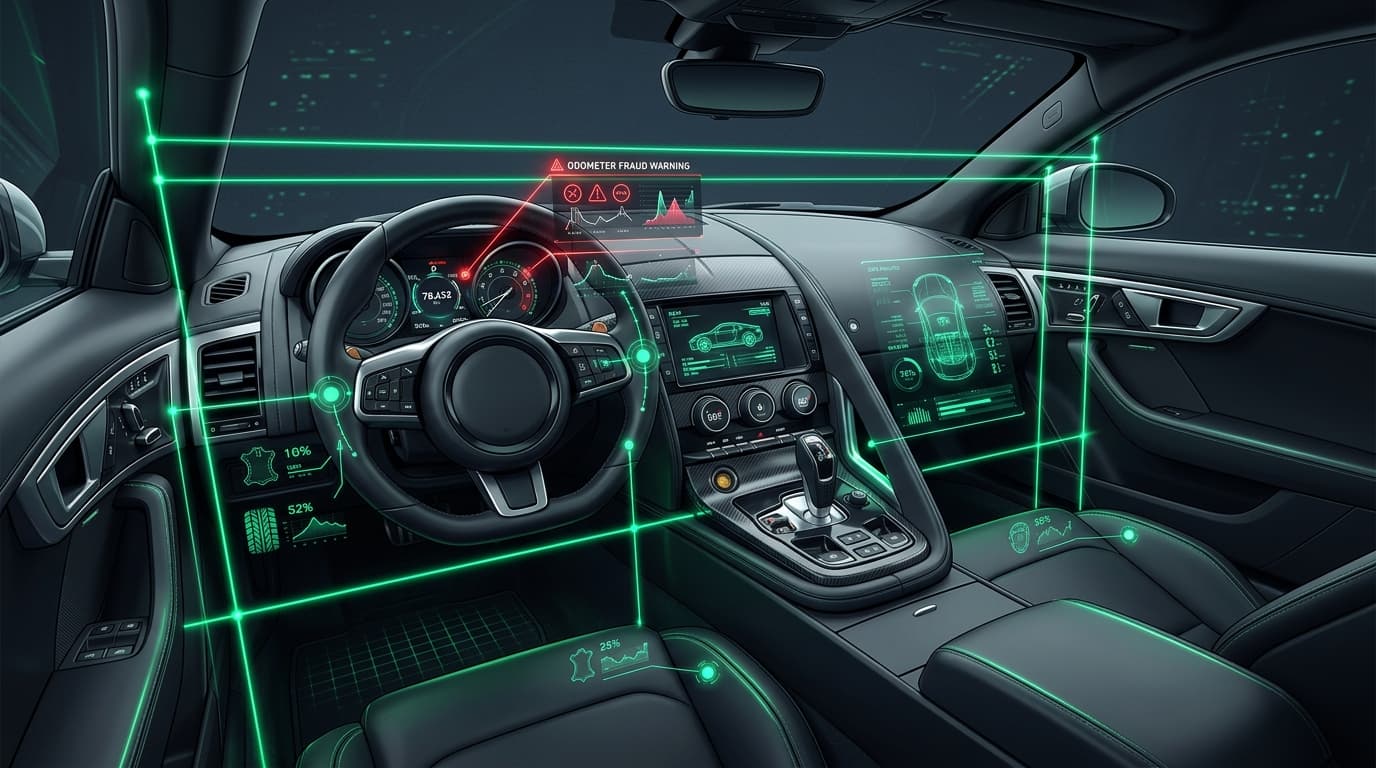
Deep Analysis with Visual AI Arabal AI uses computer vision to scan interior photos uploaded by users. By analyzing micro-scratches on leather, button fading, and material wear, it calculates a wear rating. If the wear rating is disproportionately high compared to the odometer reading, the system warns the user. This helps you identify fraud before scheduling a physical inspection.
| Interior Component | Expected Condition (<30k Miles) | Signs of High Mileage Rollback |
|---|---|---|
| Steering Wheel Grip | Matte texture, defined grain | Shiny, smooth surface, or peeling leather |
| Pedal Rubbers | Distinct ridges, no metal showing | Worn down ridges, exposed metal edges |
| Seat Bolster | Firm foam, intact stitching | Collapsed foam, cracked leather, frayed thread |